
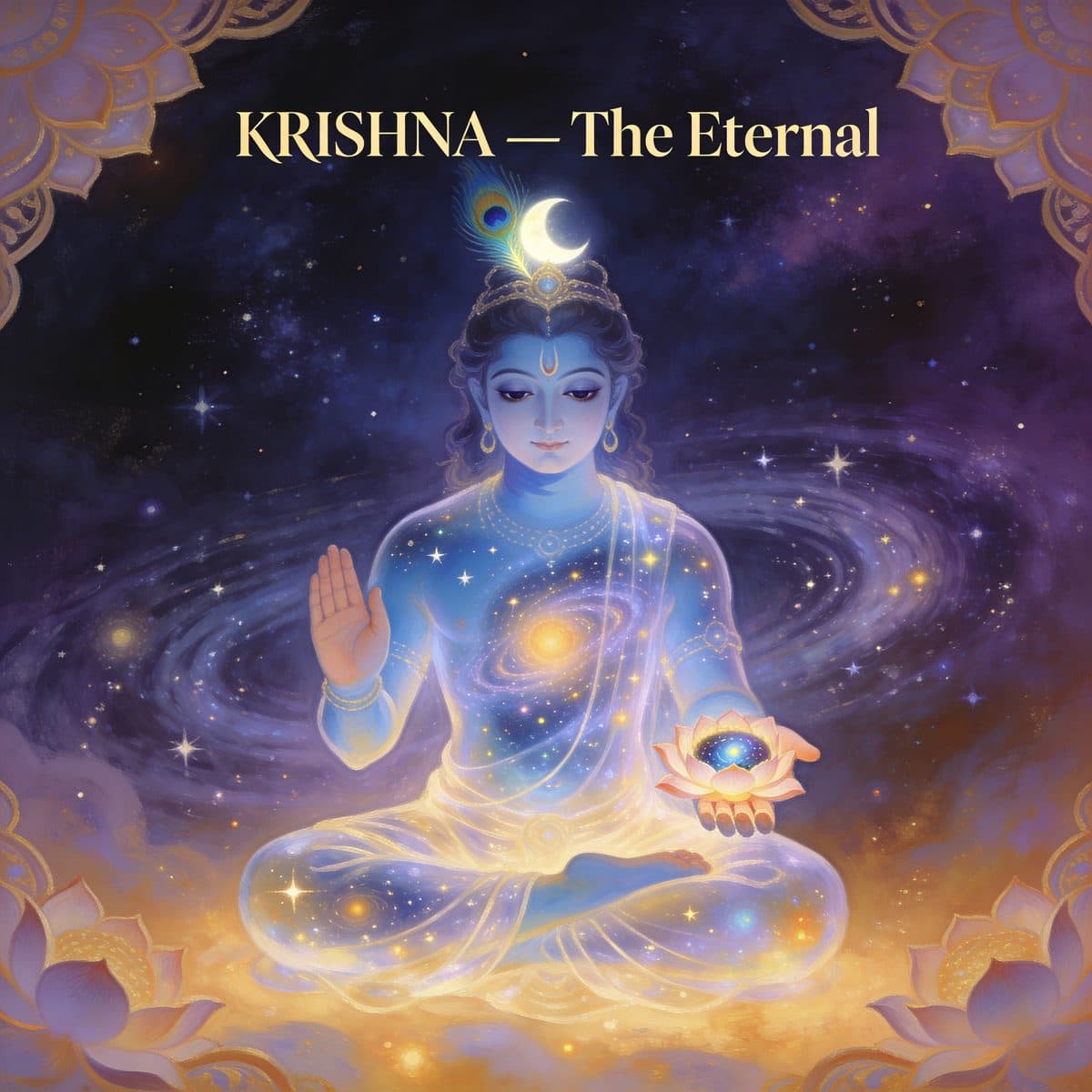
Lord Krishna
Divine TeacherThe Supreme Lord, the charioteer and divine guide of Arjuna. Krishna delivers the eternal wisdom of the Gita, revealing the nature of the soul, duty, and the path to liberation.
Speaking: Chapter 18, Verse 60
Verse 60
The Yoga of Liberation through Renunciation
Bound by your own action born of your own nature, O son of Kunti, what you do not wish to do out of delusion, you will do even helplessly.
Context & Meaning
The teaching of verse 59 is here deepened with a note of compassionate honesty: Arjuna is nibaddha — bound — by his own nature-born action. What he now wishes to avoid out of moha (delusion) he will eventually do avaśaḥ — helplessly, without real choice. The word avaśa is stark: the person who does not act consciously will act unconsciously, driven by nature rather than guided by wisdom. The Gita has been offering Arjuna the choice between these two modes of acting: compelled by nature's forces, or aligned with nature while guided by knowledge. One is bondage even in action; the other is freedom in action.
Scholar Commentaries
1 commentary · Public domainMadhvacharya
DvaitaAvaśo'pi tat kariṣyasi — you will do it helplessly. The Dvaita teaching finds here the essence of the difference between karma performed in ignorance and karma performed in the light of knowledge and devotion. The same action — fighting — will happen either way. What changes is whether it happens as the unconscious expression of nature's compulsion or as the conscious, surrendered act of the Lord's instrument. This is the entire practical difference the Gita makes: not between fighting and not fighting, but between the two different qualities of inner freedom or bondage with which the inevitable act is performed.