
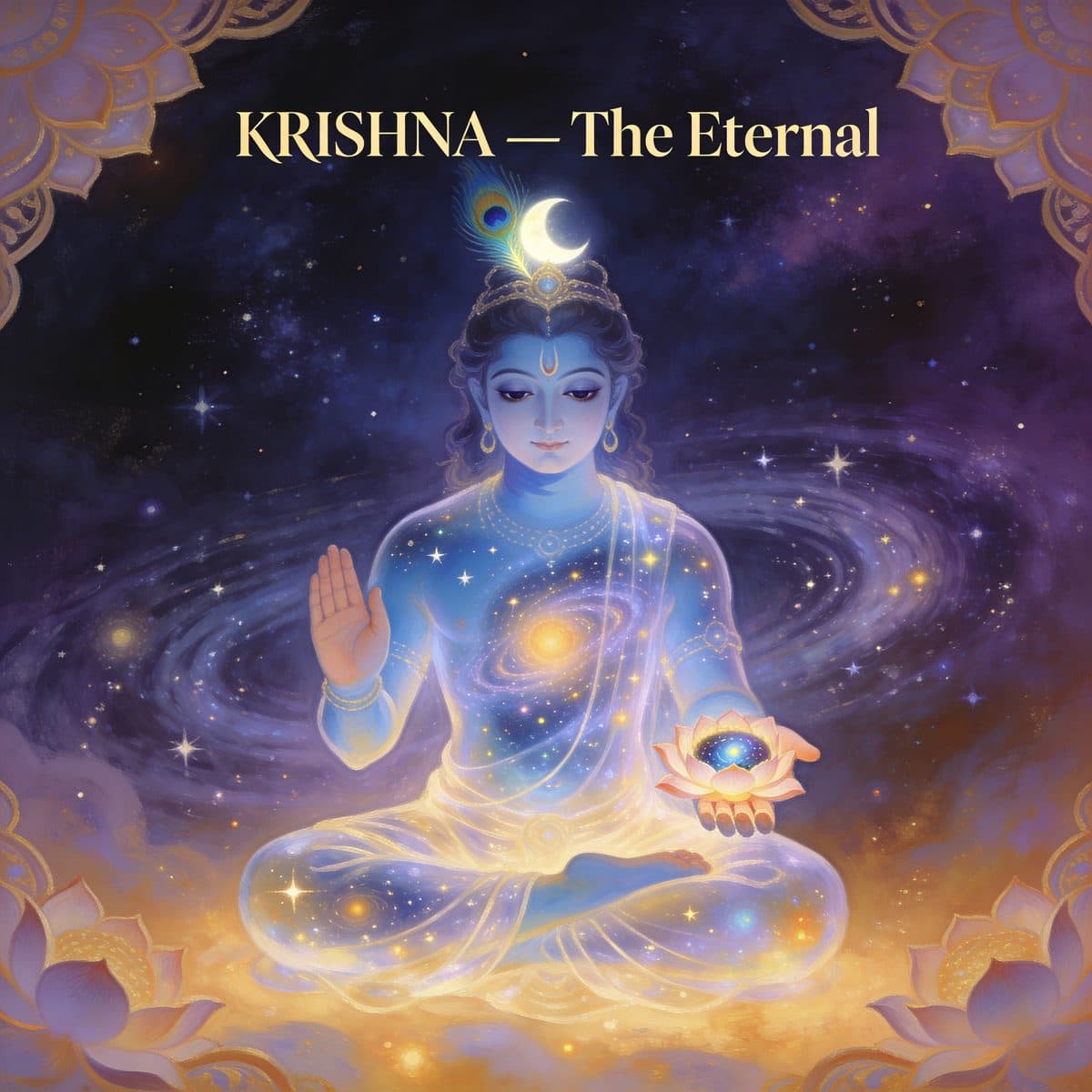
Lord Krishna
Divine TeacherThe Supreme Lord, the charioteer and divine guide of Arjuna. Krishna delivers the eternal wisdom of the Gita, revealing the nature of the soul, duty, and the path to liberation.
Speaking: Chapter 18, Verse 6
Verse 6
The Yoga of Liberation through Renunciation
But even these actions should be performed, O Partha, giving up attachment and the fruits. This is my definite and highest opinion.
Context & Meaning
The pivot of the entire teaching on tyāga is contained here: even the highest actions — yajna, dāna, tapas — must be performed with the relinquishment of saṅga (attachment) and phala (fruit). The actions themselves are not abandoned; the ego's grip on them is abandoned. This is the surgical precision of true renunciation: it does not operate on the action but on the actor's relationship to the action. The word uttamam — highest — marks this as Krishna's supreme position on the question. It unifies both schools cited in verse 3: actions of purification must be performed (answering the second school) but must be performed without attachment to their fruits (incorporating the spirit of the first school's concern about karma-bondage).
Scholar Commentaries
1 commentary · Public domainMadhvacharya
DvaitaSaṅgam tyaktvā phalāni ca — giving up attachment and the fruits. The Dvaita reading emphasises that this is the very definition of action offered to Vishnu: when the actor truly releases both the clinging to the process and the desire for the outcome, the action becomes transparent — and through that transparency, it becomes an act of worship. The abandonment of attachment and fruit is not a subtraction from the action but its elevation into the divine order. This is why Krishna calls this view uttamam — the highest. It preserves action while transforming its inner meaning entirely.