
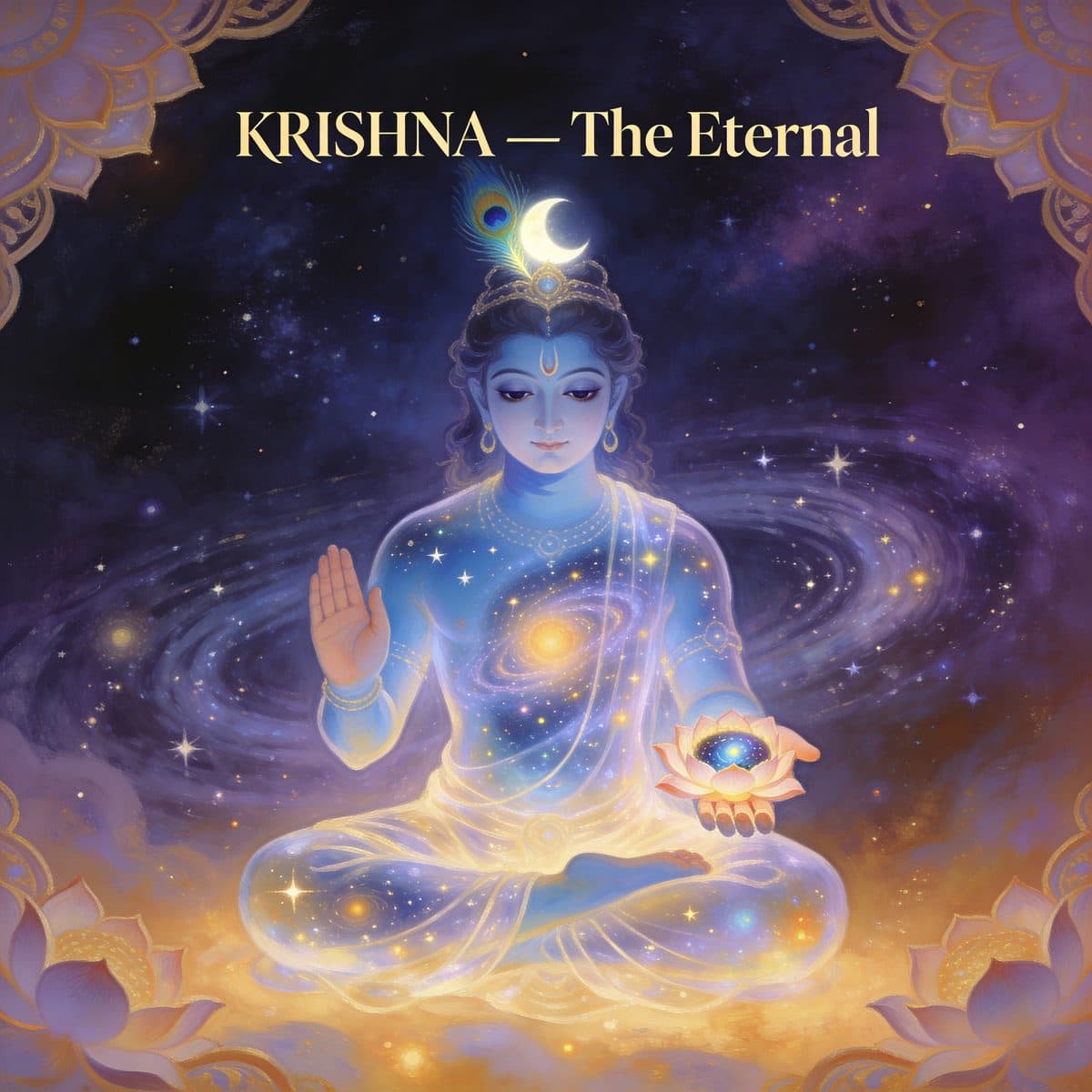
Lord Krishna
Divine TeacherThe Supreme Lord, the charioteer and divine guide of Arjuna. Krishna delivers the eternal wisdom of the Gita, revealing the nature of the soul, duty, and the path to liberation.
Speaking: Chapter 18, Verse 44
Verse 44
The Yoga of Liberation through Renunciation
Agriculture, cattle-keeping, and trade are the natural duties of the Vaishya; service is the natural duty of the Shudra.
Context & Meaning
The duties of the remaining two varnas are stated with characteristic concision. The Vaishya path involves the stewardship of the material resources of the community — agriculture (kṛṣi), cattle-keeping (gaurakṣya), and trade (vāṇijya). These are the activities through which the earth's abundance is cultivated, preserved, and distributed. The Shudra's path is paricaryā — service, the direct offering of one's energy and capacity in support of others. In the Gita's vision, service is not a lesser calling: it is the path of love expressed through action, and it has its own dignity and its own route to liberation. The person who serves with full heart and without ego is as near to God as the greatest philosopher.
Scholar Commentaries
1 commentary · Public domainRamanujacharya
VishishtadvaitaParicaryātmakaṃ karma — action whose nature is service. The Vishishtadvaita tradition holds service in the highest regard: Bhagavān himself, in the form of the inner controller, serves all beings by sustaining their existence moment to moment. Service performed in this spirit — as a divine activity, an expression of divine love — is among the purest forms of bhakti. The one who serves with this understanding is not diminished by their role but elevated by their understanding of what service truly is. Every act of genuine service, in this view, is a participation in the divine service that sustains the universe.