
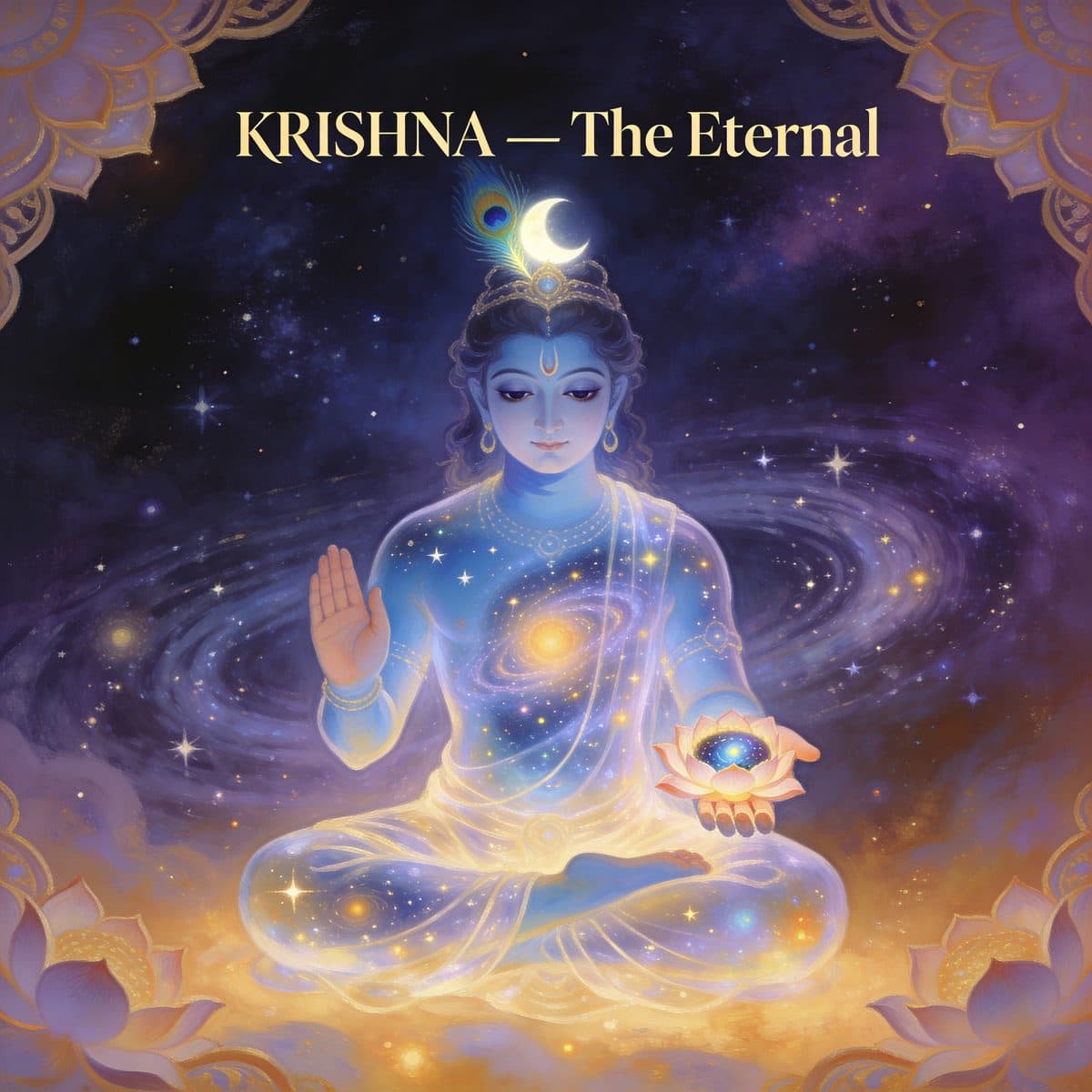
Lord Krishna
Divine TeacherThe Supreme Lord, the charioteer and divine guide of Arjuna. Krishna delivers the eternal wisdom of the Gita, revealing the nature of the soul, duty, and the path to liberation.
Speaking: Chapter 18, Verse 4
Verse 4
The Yoga of Liberation through Renunciation
Hear my conclusion about relinquishment, O best of the Bharatas. Relinquishment, O tiger among men, has been declared to be of three kinds.
Context & Meaning
Krishna signals that he will now deliver a definitive teaching rather than a survey of opinions. He addresses Arjuna as Bharatasattama (best of the Bharata clan) and Puruṣavyāghra (tiger among men) — two honorifics that invoke Arjuna's nobility and strength. This is not a gentle suggestion but a resolution handed down with the authority of one who has seen both the question and the answer from their ultimate vantage point. The announcement that tyāga is threefold places it immediately within the framework of the three Gunas that has structured Krishna's analysis throughout the previous chapters. The listener is prepared: what follows will be a detailed map of the inner landscape of renunciation.
Scholar Commentaries
1 commentary · Public domainAdi Shankaracharya
AdvaitaNiścayam — my settled conclusion, my resolved judgment. This word distinguishes what follows from the various schools of opinion cited in the previous verse. Krishna speaks not as one among many teachers presenting a position for debate but as the supreme teacher giving the final word. The Advaita tradition notes that this definitive teaching on tyāga will ultimately point beyond all action and non-action to the non-dual awareness in which the question of what to do and what to give up becomes irrelevant — because the doer has been seen through.