
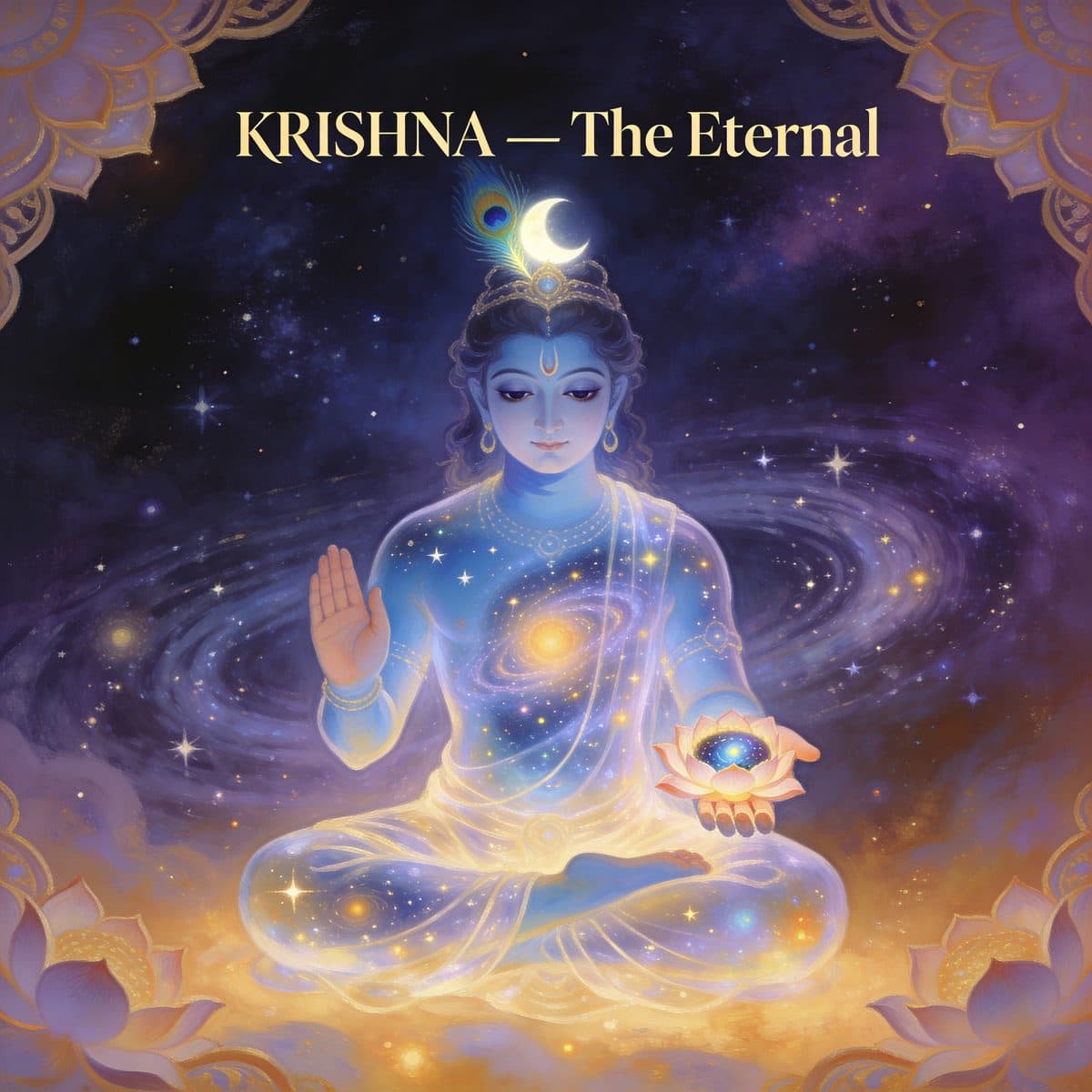
Lord Krishna
Divine TeacherThe Supreme Lord, the charioteer and divine guide of Arjuna. Krishna delivers the eternal wisdom of the Gita, revealing the nature of the soul, duty, and the path to liberation.
Speaking: Chapter 18, Verse 23
Verse 23
The Yoga of Liberation through Renunciation
Action that is prescribed, free from attachment, performed without love or hatred, by one who desires no fruit — that is called sattvic.
Context & Meaning
The characteristics of sattvic action are now laid out with precision. It is niyata — in accordance with one's duty and the order of dharma. It is free from saṅga — the sticky quality of attachment, the clinging that makes action about "me." It is performed without rāga (love-craving) or dveṣa (aversion-hatred) — without the distortions of personal attraction and repulsion. And it is done by one who is aphalaprepsunā — who does not seek the fruit. These five qualities together describe the action of a liberated person — engaged fully in what must be done, undistorted by any personal agenda, free in the very act of acting.
Scholar Commentaries
1 commentary · Public domainRamanujacharya
VishishtadvaitaAphalaprepsunā — by one who does not seek the fruit. In the Vishishtadvaita framework, this relinquishment of the fruit is not an absence but a direction: the fruit is not sought for the self but offered to Bhagavān. Sattvic action is therefore not emotionally flat or disengaged — it is intensely directed, but toward the divine rather than the personal self. The absence of rāga and dveṣa does not mean indifference; it means that the action is freed from the distortions of personal preference and can therefore flow with perfect alignment to what is needed. This is the fullest expression of karma as worship.