
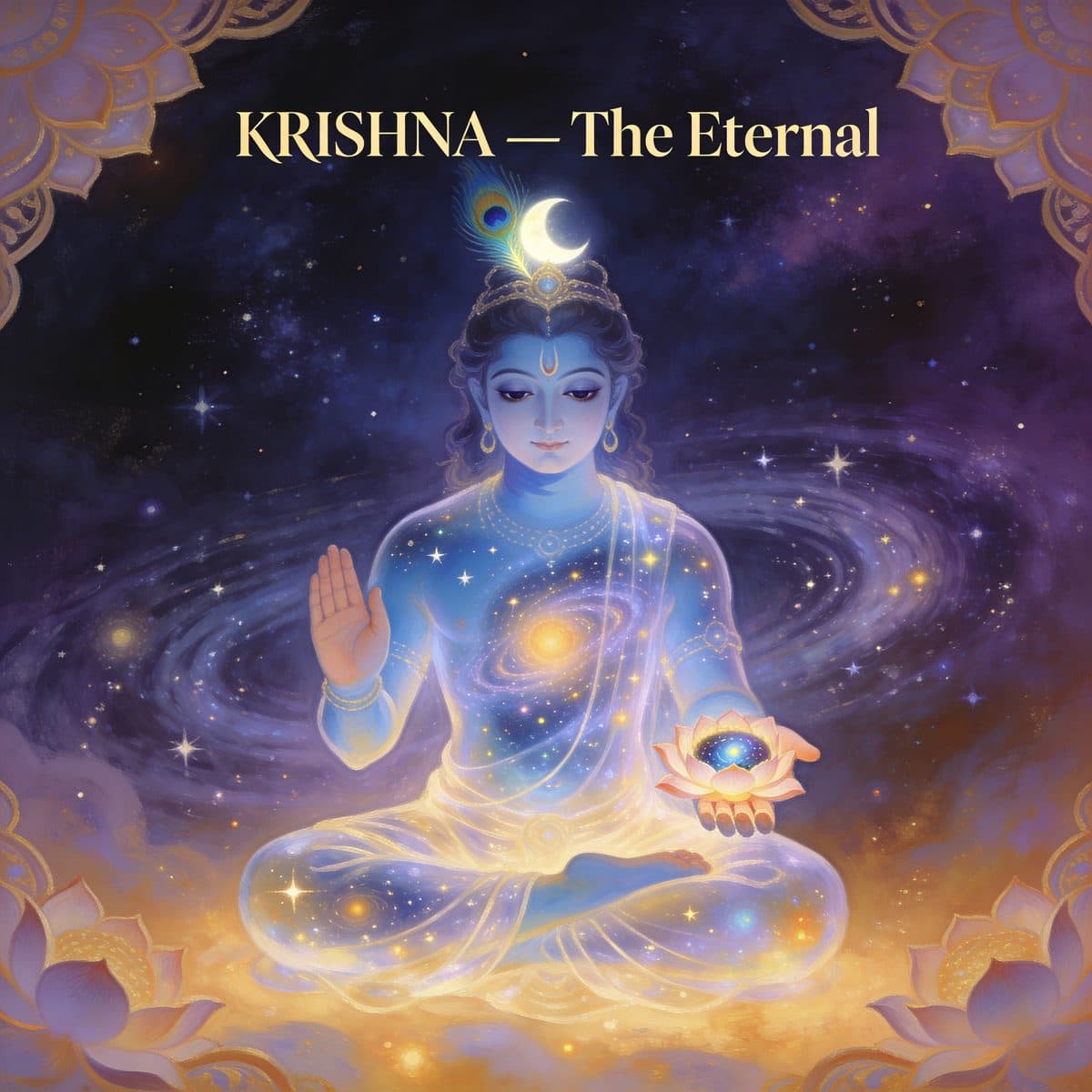
Lord Krishna
Divine TeacherThe Supreme Lord, the charioteer and divine guide of Arjuna. Krishna delivers the eternal wisdom of the Gita, revealing the nature of the soul, duty, and the path to liberation.
Speaking: Chapter 18, Verse 21
Verse 21
The Yoga of Liberation through Renunciation
That knowledge which sees in all beings separately various different realities of different kinds — know that knowledge to be rajasic.
Context & Meaning
Rajasic knowledge perceives reality through the lens of radical separateness: it sees beings as fundamentally different from each other, each with its own entirely distinct nature. This is not entirely wrong — there are genuine differences between things — but it is a partial truth that, when taken as the whole truth, becomes a source of division, conflict, and the endless clash of competing interests. Rajasic knowledge sees competition where sattvic knowledge sees complementarity, sees foreign where sattvic knowledge sees family. It generates the energy and ambition characteristic of rajas but also its characteristic tendency toward fragmentation, rivalry, and the reduction of the world to an arena of separate forces in contest.
Scholar Commentaries
1 commentary · Public domainMadhvacharya
DvaitaPṛthaktvena — through separateness. The Dvaita tradition acknowledges the reality of individual differences — this is essential to Madhva's philosophy — but clarifies that genuine difference does not imply fundamental separateness. The differences between beings are real, but they exist within the unity of Vishnu's creation and under the superintendence of the divine order. Rajasic knowledge sees the differences but not the unity that holds them; it is like seeing only the different instruments in an orchestra and hearing only noise, without perceiving the symphony that organises them into music.