
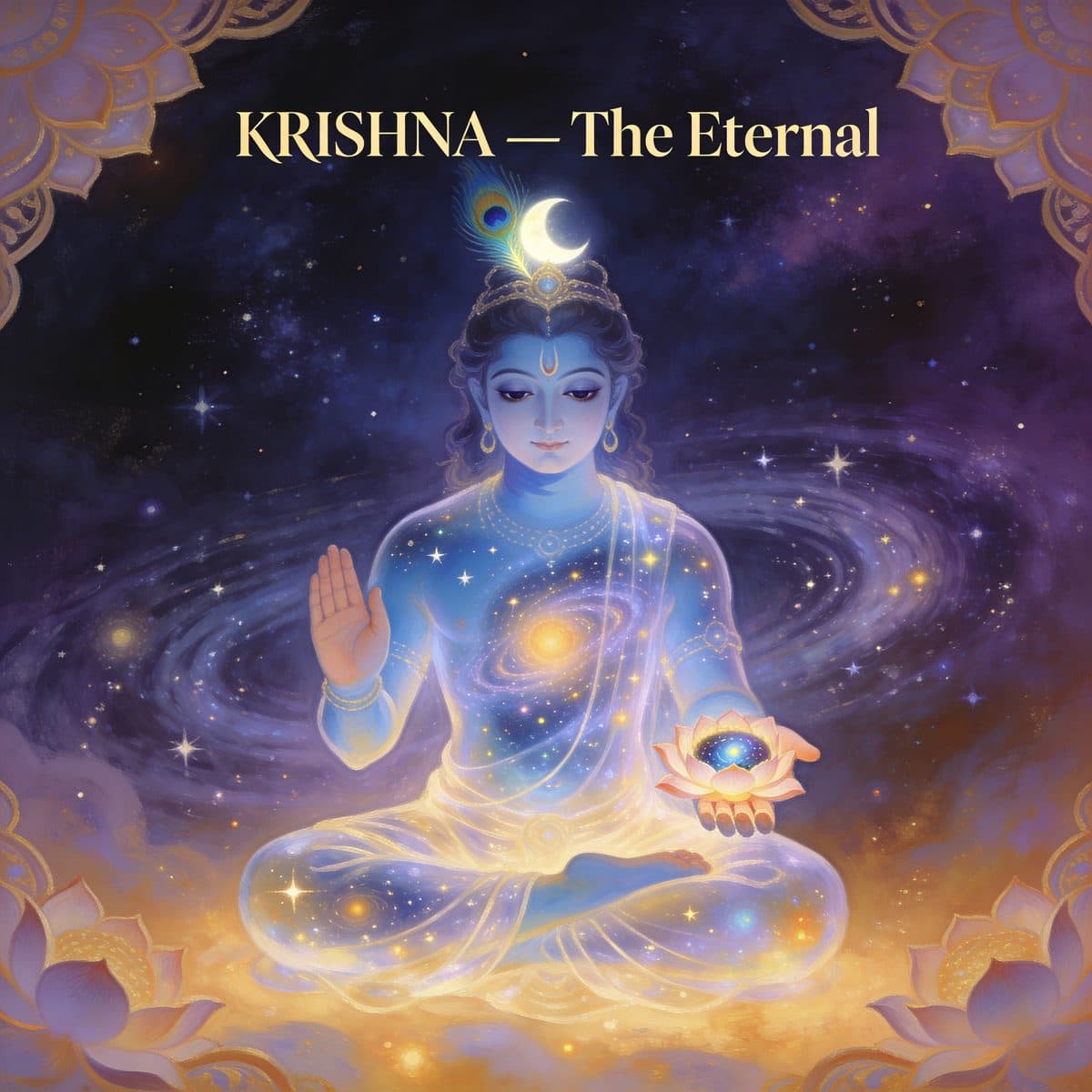
Lord Krishna
Divine TeacherThe Supreme Lord, the charioteer and divine guide of Arjuna. Krishna delivers the eternal wisdom of the Gita, revealing the nature of the soul, duty, and the path to liberation.
Speaking: Chapter 18, Verse 19
Verse 19
The Yoga of Liberation through Renunciation
Knowledge, action, and the agent are each declared to be of three kinds only, according to the distinction of Gunas in the Guna-analysis. Hear about these also.
Context & Meaning
The systematic guna-based analysis of the entire field of action begins here. Krishna announces that knowledge (jñāna), action (karma), and the agent (kartā) each divide into three types according to the three Gunas. This means there is sattvic knowledge, rajasic knowledge, and tamasic knowledge; sattvic action, rajasic action, and tamasic action; a sattvic agent, a rajasic agent, and a tamasic agent. The same structure will extend to intellect, fortitude, and happiness (covered in subsequent verses). This is one of the most comprehensive and practically useful frameworks in the Gita — a complete diagnostic tool for understanding one's inner state and orienting oneself toward sattva and beyond.
Scholar Commentaries
1 commentary · Public domainAdi Shankaracharya
AdvaitaThe guna-analysis that follows is Samkhya philosophy brought into the service of Vedanta's practical purpose: self-knowledge leading to liberation. For the Advaita path, this analysis serves to help the seeker understand the quality of their own knowledge, action, and agency — so that they can steadily cultivate sattva until even sattva is transcended in the pure awareness that knows no Gunas at all. The teaching is not ultimately about being a sattvic person; it is about recognising that you are the awareness that witnesses all three Gunas without being defined by any of them.