
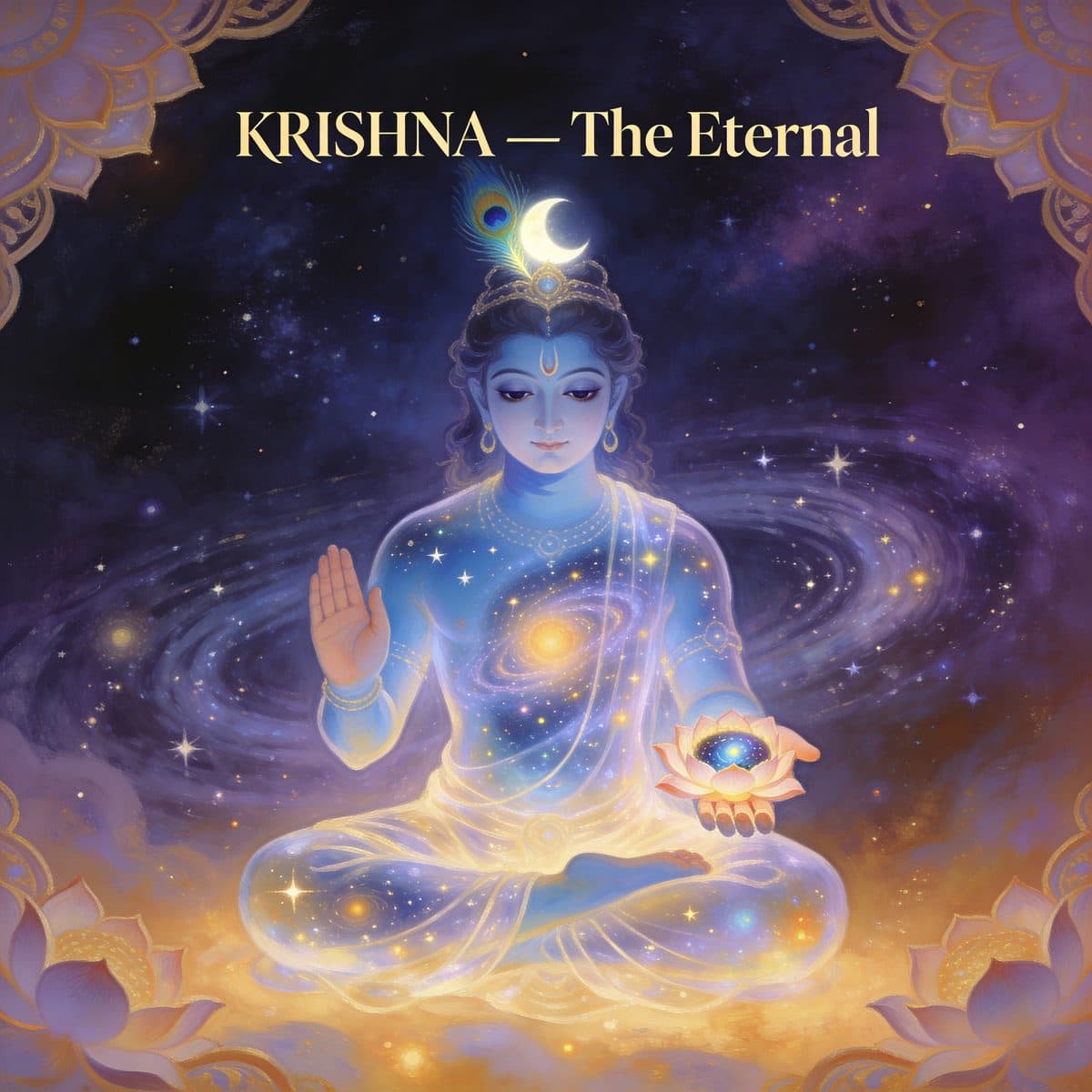
Lord Krishna
Divine TeacherThe Supreme Lord, the charioteer and divine guide of Arjuna. Krishna delivers the eternal wisdom of the Gita, revealing the nature of the soul, duty, and the path to liberation.
Speaking: Chapter 18, Verse 12
Verse 12
The Yoga of Liberation through Renunciation
For those who do not renounce, the threefold fruits of action — desirable, undesirable, and mixed — accrue after death. But for renouncers, there is none whatsoever.
Context & Meaning
The stakes of the teaching are made explicit. For those who act with attachment to fruits — the atyāginas, the non-renouncers — the karma generated by action follows them beyond death: pleasant results (iṣṭa), unpleasant results (aniṣṭa), and mixed results (miśra). These three become the forces that shape future births, future circumstances, future suffering and joy. For the true saṃnyāsī — the one who has genuinely given up attachment to outcomes — none of this accrues. The action happens; its fruit is released; no residue remains in the soul. This is the liberation the Gita has been pointing toward: not freedom from action but freedom in action, achieved through the radical relinquishment of personal ownership of results.
Scholar Commentaries
1 commentary · Public domainMadhvacharya
DvaitaThe threefold fruit — desirable, undesirable, and mixed — is the architecture of karmic bondage. The Dvaita analysis is precise: action performed without fruit-renunciation generates karma that must be exhausted through future experience, keeping the soul in the cycle of rebirth. Action performed as an offering to Vishnu, with results released completely, generates no such residue — it is like a fire that burns without leaving ash. The saṃnyāsī described here is therefore not socially defined (wearing ochre robes, living in a monastery) but internally defined: one whose actions create no karmic residue because they are fully surrendered.